 Otobong Peter
Bio
I'm a SWE who has worked across embedded engineering, developer tools, distributed infrastructure, and financial systems that connect payments, currencies, and digital assets. I spend my time thinking about how to design reliable systems in areas where technology could offer some leverage.
I started tinkering with code in 2014, building small games and web tools in high school before studying Electrical and Electronics Engineering at Rivers State University. In 2019, as an embedded engineer intern at Atopet Automations, I programmed Arduino and Raspberry Pi hardware, building an automated facial-recognition door lock system for my undergraduate thesis. Working at the intersection of microcontrollers and low-level software grounded me early in physical constraints, memory limits, and deterministic execution.
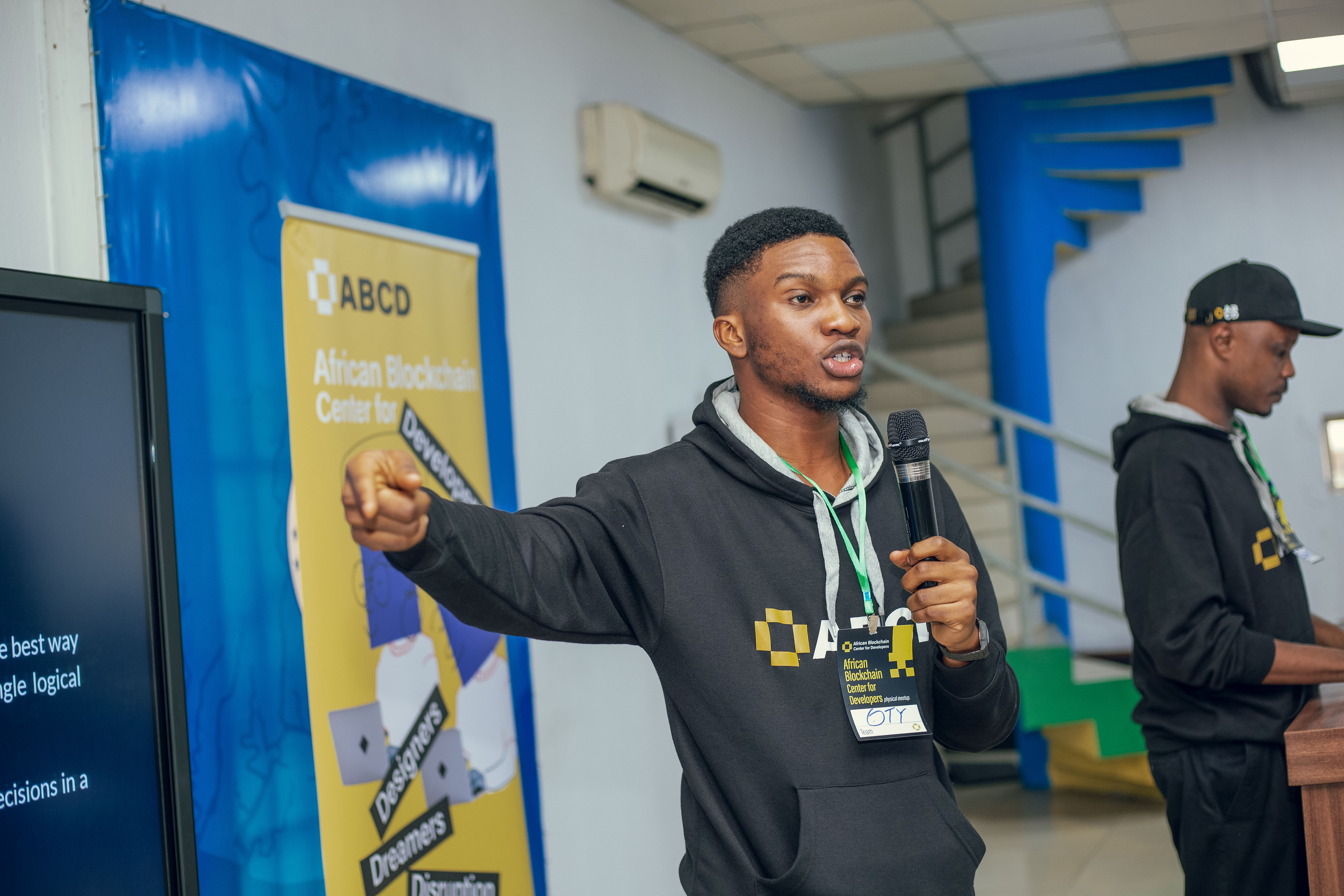
That curiosity soon expanded into developer communities and decentralized networks. In 2020, I served as Campus Lead for the Google Developer Student Club at Rivers State University, mentoring students across campus, and later volunteered with Blacks in Technology as the Abuja Chapter President, winning the BIT Foundation's Growth Award in 2022. Between 2021 and 2023, at ABCD Technologies (an IOG-incubated venture), I led engineering and developer community initiatives, later joining as co-founder to ship developer tooling and smart contracts across Ethereum and Cardano.
At LTO Network (now EQTY), I built the relay protocol across 80+ nodes, owned Ownables for programmable real-world assets (RWAs), and extended GoLandRegistry—a land registry first built with the United Nations—for Burkina Faso. I also helped lead the network's evolution to EQTY and migration to Base L2, coordinating infrastructure across the LTO Origin network and supporting the ecosystem migration.
Alongside distributed systems, I pursued research in software intelligence, completing an M.Sc. in Software Engineering in 2026. My work focused on AI-driven requirements traceability, using Large Language Models, knowledge graphs, and semantic search to keep large, evolving codebases verifiable.
My current work bridges distributed consensus with financial infrastructure—building multi-currency payment rails, FX settlement systems, and stablecoin liquidity platforms designed to make global and cross-border money movement faster, cheaper, and resilient. Outside work, I also spend time building AI systems, working on mobile applications, developer tools, and experimenting on health systems.
Outside of code, I write essays and explore leadership, theology, and fiction.